
Up to 100%
Of construction cost financed
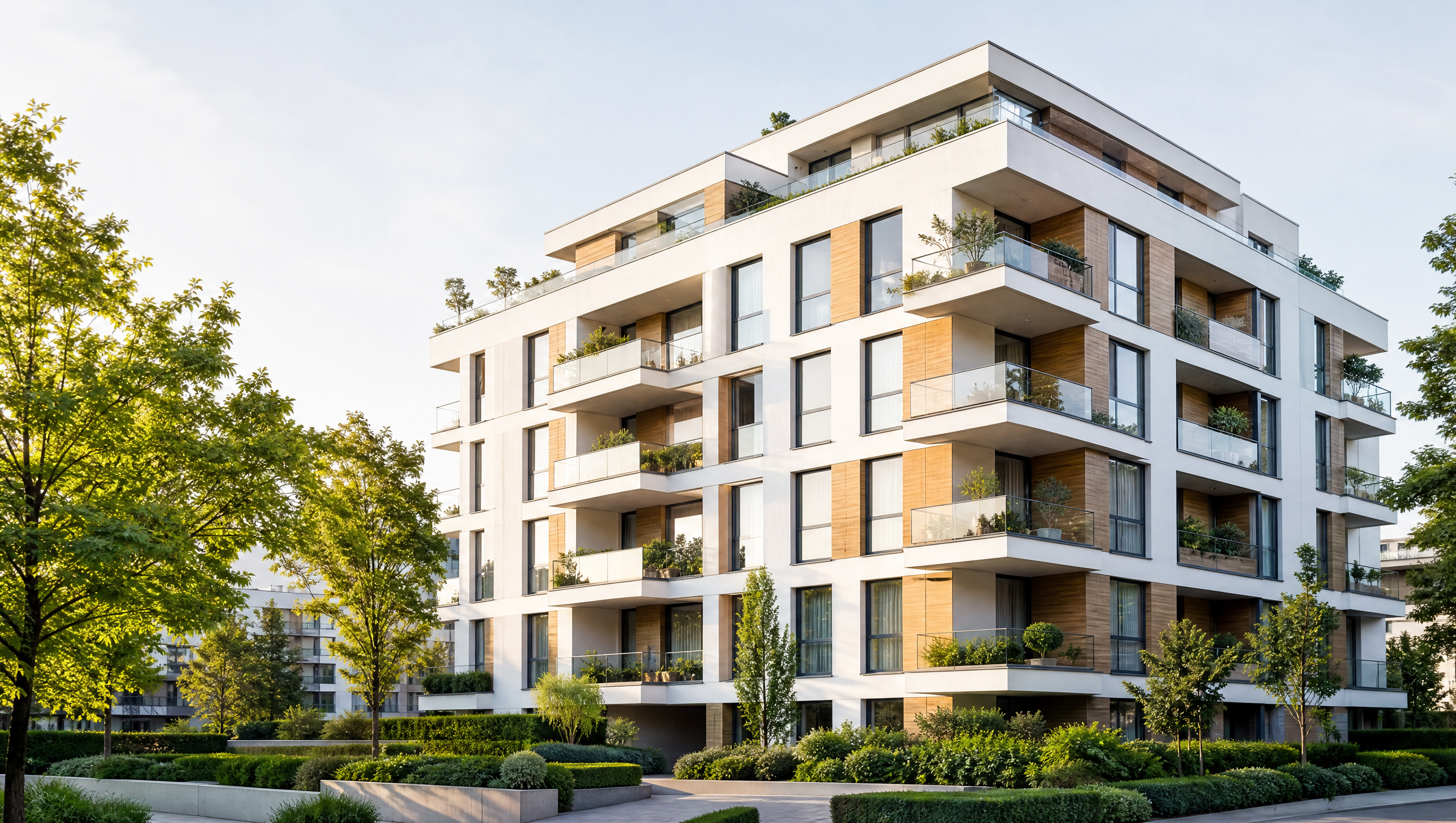
Product · Mortgage-backed
From €1,000,000 — Up to €150,000,000
Financing for real-estate developers — urban development projects, construction and refurbishment with mortgage collateral over the works.
A confidential request. We respond with judgement.
Up to 100%
Of construction cost financed
No pre-sales
Required at any point
A developer loan is medium-term mortgage financing for the construction or refurbishment of a real-estate project, secured against the land and the works in progress. Capital is released against works certifications and the borrower pays interest only on the amounts drawn — the grace period during the construction phase frees up cash for the project.
Paso a paso · 04 tiempos
First contact and project description: location, typology, budget, schedule and sales plan.
Technical and feasibility analysis. If the deal fits, term sheet with the proposed structure — initial drawdown, certification schedule, grace period.
Due diligence in parallel: independent appraisal, licence validation, technical and legal review of the project.
Notarial closing, first drawdown at signing and progressive disbursements against works certification throughout the life of the loan.
The developer loan is the right product when there is a defined buildable project — land paid for, execution design and building licence (or close to obtaining it) — and capital is needed to build.
New-build housing with no pre-sales requirement, with financing up to 100% of construction.
Retail units, offices, industrial buildings, mixed-use schemes — all sectors admitted.
Repositioning of an existing asset, structural renovation or change of use.
A project started and then halted through lack of liquidity or a break with the previous financing.
Specialised developments where the bank does not contemplate the typology or demands excessive guarantees.
A combined operation: we finance the land purchase and, chained to it, the developer loan on the same operation.
Alternative financing for real-estate developers exists because bank development credit has become structurally restrictive: pre-sales of 30–50% as a condition of approval, personal guarantees from the director, analysis centred on the company's track record and committees that take months to decide. For a developer with the land paid for, a licence and proven demand, that calendar means losing the project's window. Private capital reverses the order of the analysis: first the feasibility of the project and the quality of the mortgage collateral, then the applicant's profile. That is what allows operations to be approved in days where banks take months to reach committee — or simply do not contemplate them at all.
When does it fit versus the bank? If the project has sufficient pre-sales, comfortable timelines and an impeccable balance sheet, the bank development loan may be the cheaper option. Alternative financing fits when speed decides the operation, when there are no pre-sales and no wish to wait for them, when the group's position in CIRBE (the Bank of Spain's credit-exposure register) is compromised, or when the typology — hospitality, land, stalled works — falls outside the bank's appetite. It also works as a bridge: start the works with private capital and refinance with a bank once the project is under way and sales are progressing.
Private capital also covers every phase of the development cycle — each with its own specific structure.
The first link in the chain. Our land-purchase loan finances up to 70% of the purchase price of fully zoned, ready-to-build land, with terms of up to 24 months and subsequent chaining with the developer loan on the same operation.
The developer loan proper: up to 100% of the construction cost, disbursements against works certifications and a grace period during the execution phase. No pre-sales and no CIRBE footprint.
Projects started and then halted through lack of liquidity or a break with the previous lender. We assess the real state of the works and the cost to complete, and the structure is designed to reactivate the project.
Repositioning of existing assets, structural renovation or change of use — the usual scenario in consolidated markets such as Marbella, Málaga and the wider Costa del Sol, where land is scarce and the value lies in transformation.
The contrast between the bank development loan and the private one shows above all in speed, pre-sales demanded, type of collateral and structural flexibility — all factors that can decide whether a project starts on time.
Aspecto
Speed
Bank development loan
Slow process (2–3 months min.) between risk committee, technical validation and formalisation.
Developer loan · Dexter
Initial response within 24–48 hours; full closing in weeks.
Aspecto
Pre-sales required
Bank development loan
Typically requires 30–50% pre-sales before approving the loan.
Developer loan · Dexter
No pre-sales. Approval is based on the feasibility of the project and the mortgage collateral.
Aspecto
Analysis focus
Bank development loan
The developer's financial profile: history, credit ranking, indebtedness, defaulter lists.
Developer loan · Dexter
Feasibility of the project and quality of the collateral. Indebtedness and minor incidents are not decisive.
Aspecto
LTC / LTV
Bank development loan
Limited by internal tables, with typically conservative LTC.
Developer loan · Dexter
Up to 100% of the construction cost, case by case on land + design + licence.
Aspecto
Structure
Bank development loan
Standard product, rigid disbursements, closed terms.
Developer loan · Dexter
Tailored — initial drawdown at signing, disbursements against certifications, grace period during the works phase.
Aspecto
Tied products
Bank development loan
Typically requires insurance, personal guarantees from the director and other tied products.
Developer loan · Dexter
No tied products, no upfront fees, no early-repayment penalty.
Aspecto
Credit-registry footprint
Bank development loan
The operation is registered in CIRBE, reducing the developer group's borrowing capacity.
Developer loan · Dexter
No CIRBE footprint: the operation does not appear in the Bank of Spain's risk registry.
| Aspecto | Bank development loan | Developer loan · Dexter |
|---|---|---|
| Speed | Slow process (2–3 months min.) between risk committee, technical validation and formalisation. | Initial response within 24–48 hours; full closing in weeks. |
| Pre-sales required | Typically requires 30–50% pre-sales before approving the loan. | No pre-sales. Approval is based on the feasibility of the project and the mortgage collateral. |
| Analysis focus | The developer's financial profile: history, credit ranking, indebtedness, defaulter lists. | Feasibility of the project and quality of the collateral. Indebtedness and minor incidents are not decisive. |
| LTC / LTV | Limited by internal tables, with typically conservative LTC. | Up to 100% of the construction cost, case by case on land + design + licence. |
| Structure | Standard product, rigid disbursements, closed terms. | Tailored — initial drawdown at signing, disbursements against certifications, grace period during the works phase. |
| Tied products | Typically requires insurance, personal guarantees from the director and other tied products. | No tied products, no upfront fees, no early-repayment penalty. |
| Credit-registry footprint | The operation is registered in CIRBE, reducing the developer group's borrowing capacity. | No CIRBE footprint: the operation does not appear in the Bank of Spain's risk registry. |
No. It is one of the key differences versus the bank: we finance developments without pre-sales. Approval is based on the technical and economic feasibility of the project, not on the percentage of units sold before starting.
To begin the study: project summary, construction budget, schedule, location and typology. To close: building licence (or very close to being obtained), execution design and land fully or partially paid for.
Up to 100% of the construction cost. The specific LTC is set after the first review, depending on the value of the land contributed, the expected sale value of the finished product and the phase of the project.
There is a first drawdown at signing and, from there, progressive disbursements against works certification. The developer pays interest only on what has actually been drawn — not on the total limit granted.
Yes, it is one of the typical scenarios. We assess the current state of the works, the cause of the stoppage and the cost to complete. The structure is designed to reactivate the project with the least possible friction.
No. The mortgage collateral over the land and the works is sufficient. Entries in defaulter lists or the developer company's prior indebtedness are not decisive — the focus is on the feasibility of the project.
It is construction financing that does not condition approval on a percentage of units sold. In banking, 30–50% pre-sales are a prerequisite; in alternative financing with private capital, the decision rests on the feasibility of the project and on the first-rank mortgage over land and works. The developer starts construction and sells while the works are under way — common in dynamic markets such as the Costa del Sol.
The initial feasibility response arrives within 24–48 hours of first contact, with judgement — not a mere acknowledgement of receipt. If the project fits, a term sheet with the proposed structure is issued and due diligence advances in parallel: appraisal, licence, technical and legal review. The full closing is typically resolved in weeks, against the 2–3 month minimum of the bank circuit.
Less profile documentation and more project documentation. For the initial study: project summary, construction budget, schedule, location and typology. For the closing: building licence — or very close to being obtained —, execution design and land fully or partially paid for. No pre-sales, no bank ranking of the director and none of the exhaustive history demanded by the traditional risk committee.
A developer loan is the financing a real-estate developer requires to build their project. It generally integrates the purchase of the land or building and the financing of the works, although — depending on whether the project must be financed from scratch, only certain phases are needed, or a stalled project must be continued — it can be split into several sub-loans.
To acquire land that has reached the legal stage of urban development at which building is already possible — the step prior or complementary to the developer loan.
Its purpose is to finance the execution of the real-estate project itself — new build or full refurbishment.
To resume works halted by disagreements with the previous financing. The structure adapts to the current state of the works and the outstanding cost.
The usual scheme combines three tranches. First drawdown at signing — capital released at the notary's office to start the works, cancel prior debt over the land or cover initial costs. Progressive disbursements against works certification — the rest of the capital is released against progress certified by the project's technical management. Interest paid only on drawn capital — the developer does not pay interest on the total limit granted, only on the capital actually used at any given time.
The grace period during the works phase is fundamental breathing space for the project's treasury. It allows resources to be concentrated on execution and the amortisation of principal to be deferred until the works finish and the planned exit arrives — sale, refinancing or operation of the asset.
Real-estate projects do not wait. Traditional banking piles on bureaucracy and hardens its conditions — pre-sales demanded, director rankings, tied products — and many viable projects never get off the ground. Our approach is the reverse: speed, structural flexibility and focus on the project, not on the developer's profile.
We finance across all sectors — residential, commercial, hospitality, industrial, logistics — with coverage of 100% of construction where the asset and the feasibility allow it. The first-rank mortgage over the land and the works is the standard formula; the disbursement schedule, the grace period and the terms are designed around the project's real calendar, not around a standard product.